

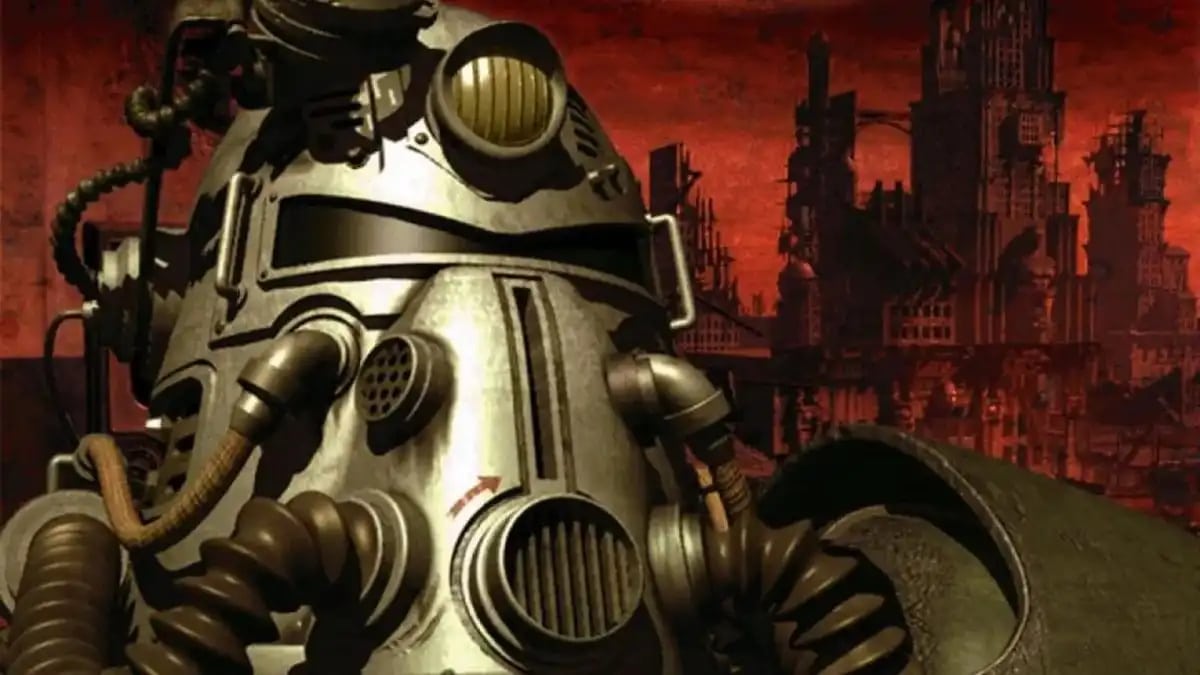
In the history of video games, some classics have reached their iconic status today through coincidence or necessity. Here original Fallout is one of these games; The isometric role-playing game we know today was actually conceived in a completely different form in the minds of its developers, as a first-person experience. Leonard Boyarsky, one of the creators of the game, shared this striking fact with the gaming world years later, shedding light on the behind-the-scenes of the legend.
Boyarsky, Interplay Entertainment team original Fallout He first designed the project as an adventure played through the eyes of the character in a three-dimensional world. explained. However, the technological possibilities in the mid-1990s were quite insufficient to realize this vision. This situation pushed the development team to make a radical decision, completely changing the direction of the project and bringing an unforgettable isometric masterpiece to the gaming world.
Original Fallout's Development Process and First-Person Fantasy
The mid-1990s were a time when 3D graphics were slowly gaining ground in the gaming world, but this technology was still in its infancy. The development team at Interplay aimed to present a post-nuclear apocalypse world to players in the most immersive way, and believed that the best way to do this was through a first-person perspective. Having the player see the Wasteland directly through their character's eyes was an approach that would maximize the atmosphere and sense of danger.
Leonard Boyarsky and programmer Tim Cain discussed this idea from the very beginning of the project. The player moves in a full-fledged 3D space and experiences the world in this way, original Fallout It was one of the biggest dreams ever made. This vision had the potential to revolutionize the role-playing game genre and showed how ambitious the team was.
But this audacious vision had to face the harsh realities of the graphics engines and hardware power of the period. The team quickly realized that it was impossible to capture the level of detail and atmospheric depth they desired with the primitive 3D technology of the time. This situation, original Fallout It brought the project to a crossroads: either compromise the vision and create a simplified 3D world, or take a completely different path.
Frontiers of Technology: Why Was Isometric Perspective Chosen?
The biggest hurdle for the development team was the idea of compromising on the level of detail. In a first-person game, every object, character, and location had to be modeled in three dimensions, which meant an extremely limited polygon count with the technology of the time. This situation, original Fallout It meant sacrificing the rich and detailed art style envisioned for the project, which was unacceptable.
As Boyarsky noted, instead of giving up visual details to create the atmosphere they desired, they completely scrapped the idea of 3D graphics. Instead, they focused on a visual style in which events are enhanced with text-based explanations and the player's imagination rather than shown directly. The isometric perspective offered the perfect backdrop for this approach.
This strategic step back is actually original Fallout He helped his game find its identity. The isometric camera allowed developers to create much more detailed, hand-drawn two-dimensional locations and characters. In this way, technological limitations ceased to be an obstacle and turned into a tool that enabled the game to turn into a unique artistic and narrative power.
The Role of Isometric Perspective in Creating Detail and Atmosphere
The isometric perspective allowed the team to fully reflect the pessimistic and eerie atmosphere of The Waste Lands to the player. Each location was adorned with fine details, from piles of debris to rusted car skeletons. This visual richness, which could never be achieved in a first-person game, drew the player into the world and encouraged exploration.
Moreover, this design choice deeply affected the game's narrative. Since the developers didn't have to show everything visually, they were able to put more emphasis on dialogue and descriptive text. This situation, original Fallout He gave his game a literary depth and made the experience more personal by creating a world that comes to life in the player's mind.
As a result, what started as a technological limitation has become one of the game's greatest strengths. Leonard Boyarsky, this situation original Fallout He believes that it did not take away from the appeal of his game, but rather helped create a unique style that would become the signature of the series. This approach, which triggers the player's imagination, is one of the most important reasons why the game is remembered even after years.
Bethesda's Takeover and Transition to the Third Dimension: Fallout 3
Years later, when the rights to the Fallout brand were purchased by Bethesda Game Studios, a new page was opened in the history of the series. Using all the possibilities offered by modern technology, Bethesda, original Fallout decided to realize the dream that its creators had dreamed many years ago. Released in 2008, Fallout 3 brought the series into a fully three-dimensional, first-person world.
Although this transition caused great controversy among long-standing fans of the series, it was actually a reflection of the vision that the Interplay team had been aiming for from the very beginning. Technology had finally reached a level that could realize the idea of experiencing the Waste Land through the eyes of the character, without sacrificing detail and atmosphere. Fallout 3, in this sense, original Fallout It was the realization, albeit delayed, of a dream set for him.
This step by Bethesda introduced the Fallout series to a much wider audience and brought the popularity of the brand to an unprecedented level. Although it has moved away from its isometric roots, the next generation of Fallout games has managed to keep the spirit of the series alive in a modern format, preserving the sense of exploration, atmosphere and player freedom. This situation, original Fallout It proves how strong the solid foundations laid by us are.
The Legacy of Leonard Boyarsky and The Outer Worlds 2
So, what made, original Fallout What is Leonard Boyarsky, one of the visionary names behind the game, doing today? He continues his career at Obsidian Entertainment, another legendary studio. Obsidian has produced one of the most popular games in the series, such as Fallout: New Vegas, and is considered one of the studios that best understands the spirit of classic Fallout.
Boyarsky and his team are currently working on The Outer Worlds 2. The Outer Worlds series, with its black humor, satirical narrative and importance given to casting choices, original Fallout It is seen as a spiritual continuation of his plays. These games give classic role-playing games a modern twist with an old-school approach.
This shows how permanent the design philosophy that Boyarsky and developers such as Tim Cain brought to the gaming world is. Born under technological constraints original Fallout, created a school that inspired countless games that came after it. Projects such as The Outer Worlds stand out as the most important carriers of this legacy today.


